 The Crosswalk
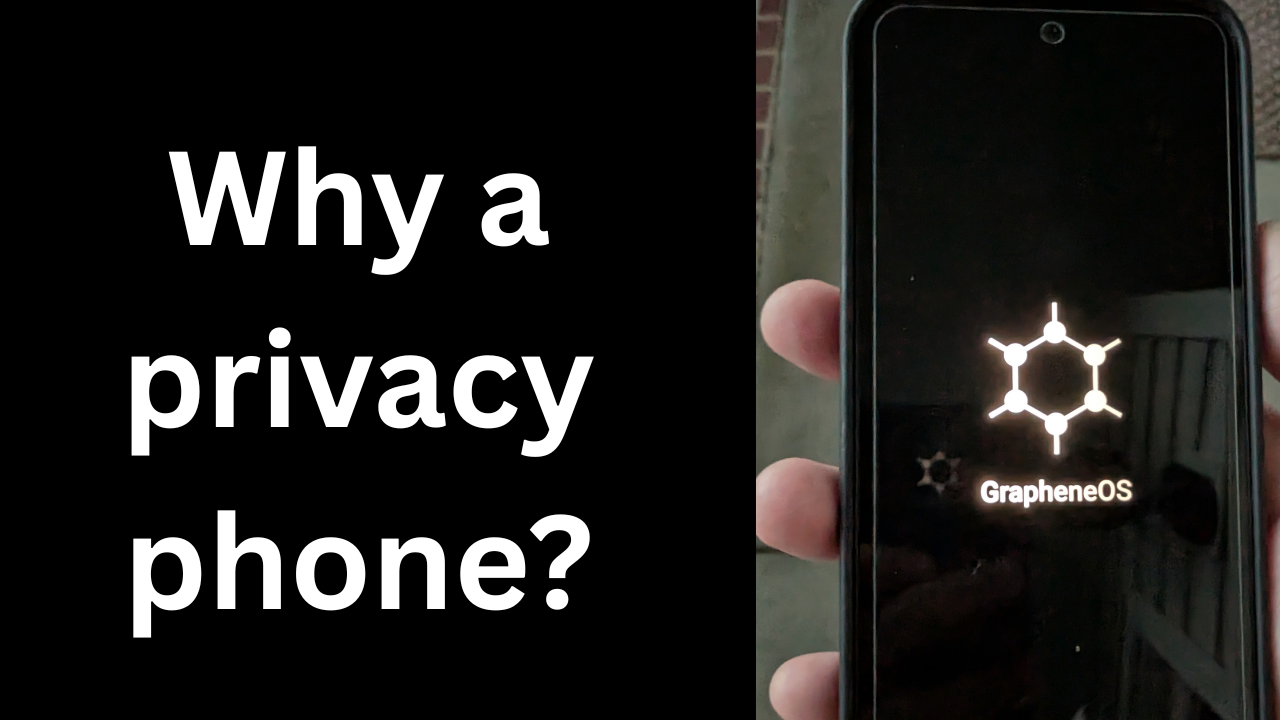
Why I Chose a Privacy Phone: My Experience with GrapheneOS
Practical privacy protection without sacrificing essential functionality
I want to talk about phones a bit this month. Google is rolling out changes this year and next year that are affecting privacy, open source Software whose code is publicly available and modifiable. Transparency, collaboration, and often free as in free lunch are important parts of the open source model. , and one change related to identity verification for app developers people who write software and apps . In response to that and other things Google and Apple are doing, people are looking for alternatives. I want to talk about that also this month. Today, I’ll talk a little more about my phone and why I chose it.
Are privacy phones practical and safe?
I think so. It shouldn’t be seen as odd to want reasonable privacy. Boundaries are healthy and important in life. Some people seem to think you’re “up to something” if you value your privacy, but I don’t get that at all. That same person likely wouldn’t want everyone they know to hear their conversations with everyone else. You’d never be able to freely vent about a boss, a friend, or talk through ideas if that boss heard your private vent to another coworker or friend. I think deep down everyone values privacy. I can’t imagine many people would want a smart speaker or phone sending the sounds of their bedroom to be stored at a data center somewhere.
Is the default tech safe?
I don't see a lot of the defaults as safe. Here's an example from my life. I didn’t want smart speakers in my house, but someone wanted to try it out. How neat. Whether or not I kept the speakers muted apparently didn’t matter. I know this because you could request your data, or at least you could at the time, and hear what it’s recorded. Hearing things recorded while the device was muted is definitely not ideal. Or the times it detected a wake word because something you said “sounded like” the wake word. I think anyone who knows me knows I have nothing to hide. It’s about freedom, not hiding. But get out of here with that stuff, tech companies.
Frequent company data breaches
In addition, companies who hold our data have breaches and lose things or leak things too frequently for me to want them to have it. I had cancer this year and already got a notification just a couple months after surgery that my information was leaked from one of the many health care companies I had to provide my information to. This year’s count of data breach notifications has exceeded last year’s count, according to CNBC, and AI only makes it easier.
So privacy phones are very practical and needed in my opinion.
Practical privacy phones, but how do I know it’s safe?
Some worry that this free software or downloading things from the internet might not be secure or safe. I’ve trusted some of these open source Software whose code is publicly available and modifiable. Transparency, collaboration, and often free as in free lunch are important parts of the open source model. companies since I was a teenager, and at certain points, I’ve trusted big tech with files and information. One of those two have disappointed me, and it’s been big tech every time. I'm not saying open source Software whose code is publicly available and modifiable. Transparency, collaboration, and often free as in free lunch are important parts of the open source model. is perfect, but let me give you an example of a big tech company that many people trusted (and still do) where your data and info aren’t totally safe or secure.
So I resisted having a smart phone for a long time, but I gave in around the time of the iPhone 5, and got an iPhone 4. The phone was so awful for many reasons, but I was turned off of smart phones because of how terrible the product and ecosystem were, and because of how short its lifespan was. I saw planned obsolecense for myself in that phone. I didn’t update to the latest version of the iPhone OS at one point because I read that my phone would stop working completely if I did, and I hadn’t had that phone for long. As someone who is a coder, I can understand why a company discontinues support or bricks a device that they can't provide support for, but as a person buying something like that, I hate throwing away something that could still be useful or could still work. It’s a choice on the company’s part to operate how they do, design the hardware the way they do, and the software. The phones can last longer.
I want to preface that it is important to do some research on open source Software whose code is publicly available and modifiable. Transparency, collaboration, and often free as in free lunch are important parts of the open source model. tools and software, because you could stumble on something malicious, just like you can download malicious apps from the Google Play Store or the Apple Store. Apps don’t have to be an outright “virus” to do harm to you. It might be a flashlight app that asks for your contacts or an app with too many ads that crashes, or an app that asks for a credit card and starts charging you without authorization, mobile game with full screen ads every few minutes.
Open source Software whose code is publicly available and modifiable. Transparency, collaboration, and often free as in free lunch are important parts of the open source model. projects for phone operating systems like Graphene An alternative to Android or iOS on phones. , /e/OS, CalyxOS, and Lineage are trusted. You might feel like it’s safe to have a Google or Apple phone because so many people have them. It may feel harder to make the leap to an open source Software whose code is publicly available and modifiable. Transparency, collaboration, and often free as in free lunch are important parts of the open source model. organization that you’ve never heard of, but that’s partly why I’m here. I want to share that this is a safe option for a regular person. It can extend the life of your phone, assuming you have a compatible phone that’s unlocked. I don’t expect to have to replace my phone within 2, 3, or even 4 years. I got a used Pixel for Graphene An alternative to Android or iOS on phones. , and I chose a Pixel 8 because I wanted Graphene An alternative to Android or iOS on phones. ’s support to last as long as possible on the phone. Looking at their website, the oldest phone they recommend you have for up to date security patching is a Pixel 6 (oriole) which is from 2021, and it’s 2026 now. That’s a good 5 years I can likely expect my phone to be up to date for its security and that’s longer than anything else you can get.
Does Graphene An alternative to Android or iOS on phones. work? It depends on your needs
I cover some of this in my blog post about my Graphene phone and my YouTube video, but I would say that it works for my life, even with a few trade-offs. I tested these apps I talk about below with and without Google Play Services. That means I tested them in a completely de-Googled typically refers to a device that has no Google-owned services or apps on it profile settings and data that belong to one user or session and I use them typically in my profile settings and data that belong to one user or session that has Google Play Services. “ de-Googled typically refers to a device that has no Google-owned services or apps on it ” refers to a phone where you don’t have ANYTHING Google on it. It’s de-Googled. I need the push notifications pop ups on your phone that alert you to messages from your friends or apps from the one day care app, so I have Google Play Services.
Graphene An alternative to Android or iOS on phones. features
Profiles
Graphene An alternative to Android or iOS on phones. gives you the option to have separate profiles, which means you can separate the apps on your phone. It’s nice if you have kids, and that's the easiest example to explain what they are. You can allow a profile settings and data that belong to one user or session with some games, paint apps, and stuff like that, no login pin required, no text or calls allowed. They can grab your phone and go there instead of changing your group chat themes or any number of things kids do on phones. My main profile settings and data that belong to one user or session is the default one that pops up, but I can switch to another one with different settings.
The other way profiles are nice are they can keep apps separate. I have to use Facebook and Facebook messenger and kids messenger. I keep them by themselves on a separate profile settings and data that belong to one user or session so Facebook isn’t snooping on my microphone, camera, other apps, my files, or my photos. Facebook is just bad news in my opinion.
Think about your needs and do some research
If you’re interested in ditching Google and Apple, or at least reducing dependence on them, it’s worth looking into this. Look up the apps that matter to you, and think about the apps you really need need notifications from. Make sure to look up if people say they’re not getting notifications.
Tap-to-pay
NFC tap to pay from Google and Apple aren’t compatible with Graphene An alternative to Android or iOS on phones. . It’s not a bug with Graphene An alternative to Android or iOS on phones. , those companies don’t recognize your phone as an authorized device. I don’t care about Google or Apple tap to pay, and if I did, I would migrate to a different service for it. For example, some fast food and restaurant apps you can pay or order via the app. McDonald’s is like this. That app doesn’t work (and dang that food is expensive for what you get), but it’s because the app is bad, not because of Graphene An alternative to Android or iOS on phones. . My grocery store app provides a QR code for “tap to pay” and I use that to maximize the gas and credit card points. Other apps have similar things.
Apps and push notifications pop ups on your phone that alert you to messages from your friends or apps
The day care app requires Google Play Services to be installed in order to deliver push notifications pop ups on your phone that alert you to messages from your friends or apps . It works fine on a de-Googled typically refers to a device that has no Google-owned services or apps on it phone other than that. My Proton mail, calendar, and Signal can show me push notifications pop ups on your phone that alert you to messages from your friends or apps either way. Those, and phone calls and texting are the main things I want notifications from. The Graphene An alternative to Android or iOS on phones. phone calls app works fine for me, and I like it.
RCS and texting
Graphene An alternative to Android or iOS on phones. ’s text messaging app is the one thing that I think someone might really struggle with. It doesn’t need Google Play Services, but it also doesn’t support RCS texts. The stock keyboard app doesn’t have a gif service.
HOWEVER, for those of you who know what RCS is, I want to add in that Graphene An alternative to Android or iOS on phones. recently announced that they're working on their default messaging app (and other things) and may be able to provide RCS support without Google Play Services involved.
For those who don't know, RCS is Google’s encrypted text message format that requires special settings in people’s phones in order to default to SMS standard text messages sent over cellular networks (usually not encrypted) . SMS standard text messages sent over cellular networks (usually not encrypted) is the plain text message. Google Messenger can work in a de-Googled typically refers to a device that has no Google-owned services or apps on it profile settings and data that belong to one user or session , but I’m not sure if that’s what caused my RCS connection to fail for a few months. What that meant was some of my friends messages didn’t come through because they don’t turn on the option to “send as SMS standard text messages sent over cellular networks (usually not encrypted) ” if RCS fails. Special toggles buried in menus are not user friendly. I wish my friends and family would use Signal, but only a few of them are there. I remember in the early 2000’s up to like the 2010’s, people seemed to be into having all kinds of different messaging apps. I don't feel like that's true anymore.
Music, movies, and audiobooks
My music app now is Qobuz, but I can tell you Spotify works fine as well. I started using a podcast app called Pocket Cast, and that seems to work without issues. I listen to music, podcasts, and YouTube a lot. I just started using the Bandcamp app this year because that one seems really good for artists. It hasn’t served up a song yet that I didn’t like. Librivox is still around if you ever were into them, and they have an app now. That app works.
Other apps
For other apps, Libby works, my grocery store apps, map apps, and the default camera and photo gallery app work. The Netflix, Tubi, and Disney Plus apps work. My partner had the Disney park app on his phone, but we didn’t test that one without Google Play Services.
Mobile games
I’m not a big mobile gamer, so I can’t speak to it much. I have Polytopia, and it requires the Google Play Store to be installed at least once to recognize the purchases I made on it. If you buy mobile games, I’d have to look into what people do there. For example, would I be able to download Minecraft pocket from their website, or would they even bother with that? I have a couple of games from the F-Droid store, which is an app store you can install on your phone from their website. If Google Play Store didn’t work on Graphene An alternative to Android or iOS on phones. for some reason in the future, you might feel like you’re missing out when it comes to mobile games.
Browser Lets you visit pages on the internet, examples are Safari, Edge, Firefox, or Brave.
I use my browser Lets you visit pages on the internet, examples are Safari, Edge, Firefox, or Brave. a lot on my phone rather than relying on apps for things like news, YouTube, banking, and some games. However, my bank requires their app for ONE thing, so I actually have to use the bank’s app for it. It wasn’t always that way, and as a coder, I know they don’t have to make it that way, so I’m pretty prickly about it and I let them know from time to time. That bank’s app works on a de-Googled typically refers to a device that has no Google-owned services or apps on it profile settings and data that belong to one user or session . I can log log files in a computer are notes where programs record events, messages, warnings, and errors so you can see what happened and when in and use it and view my accounts.
Apps that DON’T work
There are some apps that don’t work on Graphene An alternative to Android or iOS on phones. . They just won’t install, and two I’ve tried just won’t open. I can install the Starbucks app and the Target app, but they won’t open. For Starbucks, that means no stars, but I was never able to redeem stars or birthday freebies from Starbucks anyway, so I just didn’t go there that much. For Target, I've been able to do what I need with coupons in the browser Lets you visit pages on the internet, examples are Safari, Edge, Firefox, or Brave. .
Company feedback
But if you’re interested in using Graphene An alternative to Android or iOS on phones. , or if you decide to make the leap, remember you can write to companies and let them know you want them to make sure their app works there. I did that with the day care app. You’ll need to be a bit insistent, otherwise they think you just don’t know what a push notification is or how to use basic features. Even technical people who work for an app don’t always know there are other options out there. The company may decide Graphene An alternative to Android or iOS on phones. is what we call an “edge case,” and not worth their time and effort, but if they get enough feedback, they’ll consider it.
Conclusion
In conclusion, Graphene An alternative to Android or iOS on phones. was a good choice for me, and I like my phone. You can take a look at what it really looks like in my YouTube video. For the price of a used phone, I bought myself at least 5 years of security, fewer ads, less bloatware, more stability, less frequent jarring UI changes, and it feels faster. I have peace of mind that this is privacy oriented. Even with Google on it, Google isn’t allowed special access and permission to everything from behind the scenes.
Related Posts
How to Protect Yourself from AI Customer Service Gatekeepers
Companies are inserting AI into customer service without safeguards. Learn how to use virtual cards, gift cards, and smart trial tactics to protect your money when you can't reach a human.
Tap-to-Pay Options for GrapheneOS
A practical guide exploring tap-to-pay solutions for GrapheneOS users who can't rely on Apple Pay or Google Wallet, including workarounds and international alternatives.
I Couldn't Find Tap to Pay on Graphene, and I Learned Something Completely Unexpected About All of Us
When a gas station emergency exposed the limits of tap-to-pay options on GrapheneOS, I discovered that building human connection beats the all-or-nothing pursuit of perfect privacy.

About Katie B
I'm a mom and a programmer in the mid-Atlantic region of the USA. I like reading, games, hiking.
📬 Join the Newsletter
Get thoughtful writing and practical tips delivered to your inbox. No spam, just meaningful content. Make sure to check your e-mail (and maybe your spam/junk folder) for an e-mail to confirm your subscription!
Frequently asked questions
Does GrapheneOS support tap-to-pay?
No, NFC tap-to-pay from Google and Apple aren't compatible with GrapheneOS as they don't recognize your phone as an authorized device. Alternative payment methods like QR codes or app-based ordering work instead.
Can I use push notifications on GrapheneOS?
Yes, many apps like Proton Mail, Signal, and calendar can show push notifications either with or without Google Play Services. However, some apps like daycare apps may require Google Play Services for push notifications to work.
Which phones are recommended for GrapheneOS?
As of September 2026, the oldest phone Graphene recommends for up-to-date security patching is the Pixel 6 (oriole) from 2021. The author uses a Pixel 8 to maximize the expected support lifespan.