 The Crosswalk
The Distance Between Ordinary People and Power
When Remote Decision-Makers Override Our Autonomy
A world that's controlling you from afar
During a heatwave years ago, I brought my son home at the end of the day to a sweltering house that was about 90F degrees. We were already sweating from the commute, I was stupid hot, and I was thrown for a loop. The A/C wouldn't turn on, and I wasn't sure what was wrong. I walked around the outside and followed tracks to a new box attached to the HVAC on the outside of the house.
It was an impervious box. I couldn't do anything about it. My one clue was that this box had the energy company's logo on it. After some phone calls I found out that this impenetrable box cut off the power to the HVAC in order to "save money" on this rental house by disabling power to the A/C unit so it doesn't turn on the air during high demand price times leaving me no way to turn it back on at all.
I kid you not. This was (is??) a thing, and you know it had to go through a number of people to approve it. Someone came and installed it on a heat wave day. Someone deliberately installed a box that turned off my ability to cool down the house during a terrible heat wave.
Long story short, I got control of the A/C back. But I was lucky. I've had other situations where people who are far away would not budge or consider that they were being irresponsible or that they could be wrong about the situation.
Surveillance becomes dangerous not just because of data collection, but because it enables remote actors far outside our lives and our communities to override our choices and autonomy.
The black box
I think this situation is the perfect example of surveillance in our lives. People have accepted increasing levels of surveillance, and it seems ok until someone thinks they know what we need better than we do. Until someone screws us from an impenetrable box that we have no control over.
Our phone is an example of such a box. The amount of data collected on us and from us is staggering, and it can be used to make decisions about "what's best for you."
Your data is worth money
Not only are these boxes everywhere, watching us, recording us, but they constantly feed data to remote actors (and AI) who make decisions with those data. Data is bought, sold, and traded, turning your daily routine into a commodity that dictates your opportunities, your credit, and even your freedom.
Freedom
A lot of times people shrug, "I have nothing to hide." The importance of privacy is not to hide. That's not the point. The point is autonomy and freedom. I'll talk more in the future about practical, small steps you can take to protect yourself. My first action item for you is to chew on the example I'm presenting you.
Distant decision-makers
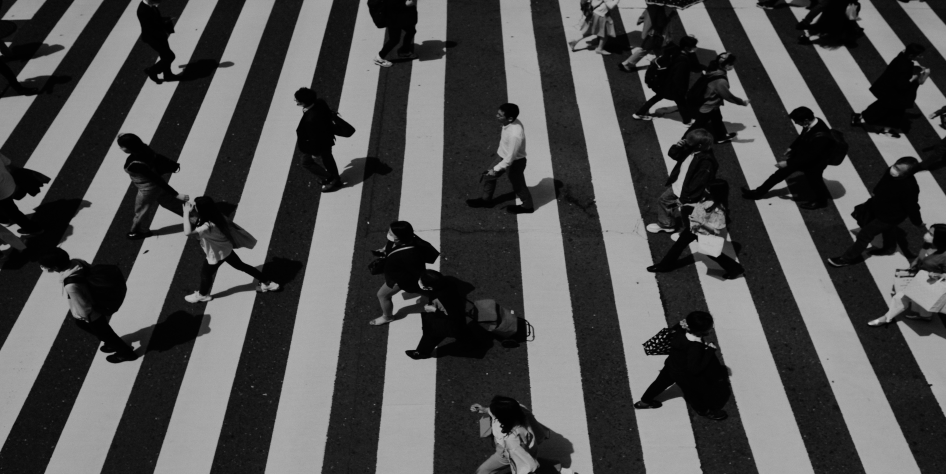
There's something strange and troubling about the relationship dynamic of this weird time we live in. We can't physically get near people who control our lives. And even if we do get a chance to boo them to their face, they'll retreat behind distance and a video call. They'll cancel town halls. Decision-makers are so removed from our daily struggles that they dismiss the cost of living crisis as a "hoax" or insist we all agree that "AI is the future," regardless of the cost.
The distance is physical, emotional, cultural, social. If you're not physically spending time with someone different than you, and you're in an echo chamber, no matter who you are, you can lose touch with reality fast. I'm fully convinced CEOs and billionaires are so far removed from their workforce that they don't remember how to talk to normal people.
Technology creating distance
Technology has connected us in a lot of ways, but at the same time it's created a huge distance between the powerful and the rest of us. CEOs can work from remote offices, the beach, far-flung dream destinations, insulated from the consequences of their decisions via mass amounts of money and physical barriers. Workers who make the magic happen have to commute hours a day, and any time commuting steals family time (or "me" time). Or just life! When my husband had to commute for 3 or 4 hours a day, he would only have enough energy for "hop on pop" at the end of the day, basically where the kids jump on him.
When the people making decisions are physically unreachable, and when they are insulated from the reality of the people they affect, it becomes incredibly difficult to push for change. How do you hold someone accountable when you can’t even occupy the same space?
How could I ever be happy without my shares?
It turns out the clearest picture of this dynamic isn't in a political science textbook, but in the bedtime stories I read as a busy parent.
I definitely see parallels between The Rainbow Fish and our conversation about modern billionaires. Rainbow Fish starts as a proud, distant loner, showing off his beautiful scales, convinced that his worth lies in keeping them all to himself. But he's lonely and unhappy. He seeks the advice of an octopus who tells him to give each of his scales away to learn how to be happy. "How could I ever be happy without them?" He asks himself, but by sharing that wealth, he makes connections with the other fish, he finally feels at home because he sees himself (the glittering scales) in the other fish he gave them away to. Just like there was a way for Rainbow Fish to rejoin the greater community, maybe there's an offramp for the rich too.
Related Posts
How to Protect Yourself from AI Customer Service Gatekeepers
Companies are inserting AI into customer service without safeguards. Learn how to use virtual cards, gift cards, and smart trial tactics to protect your money when you can't reach a human.
How to Automatically Save Version History in LibreOffice on Linux
Discover how to enable automatic version history in LibreOffice Writer on Linux by connecting Google Drive via GNOME Online Accounts. A practical guide for avoiding file loss and managing drafts without complex setups.
How to Install and Set Up LibreOffice (Free Office Suite)
Learn how to install LibreOffice on Linux, Windows, and Mac. Perfect for non-technical users who want free, privacy-respecting office software that works for everyday tasks.

About Katie B
I'm a mom and a programmer in the mid-Atlantic region of the USA. I like reading, games, hiking.
📬 Join the Newsletter
Get thoughtful writing and practical tips delivered to your inbox. No spam, just meaningful content. Make sure to check your e-mail (and maybe your spam/junk folder) for an e-mail to confirm your subscription!